THE ROLE OF ARTIFICIAL INTELLIGENCE IN RESHAPING HUMAN CREATIVITY
How Artificial Intelligence Will Enhance
Human Creativity
For centuries, humans have relied on their innate ability to innovate, conceptualize, and create. Whether through art, music, literature, or science, creativity has been the driving force behind progress and cultural evolution. However, as the demands of the modern world grow more complex and the volume of information expands exponentially, the need for new tools to enhance and accelerate the creative process has never been more critical. This is where artificial intelligence steps in.
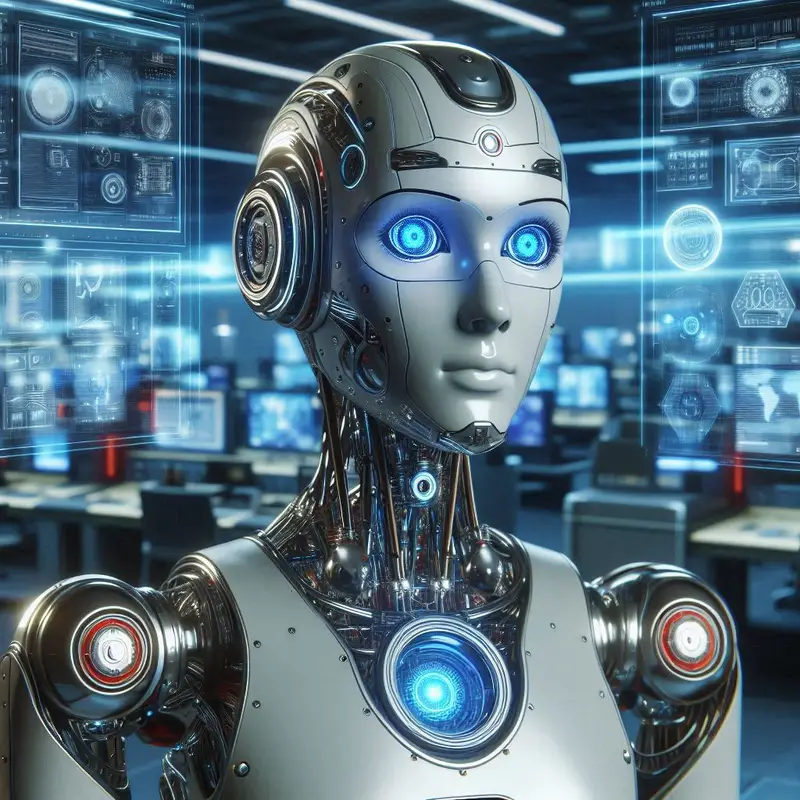
AI is often seen as a tool for automation, taking over mundane, repetitive tasks that would otherwise consume human time. However, its potential goes far beyond mere task completion. Instead, AI is emerging as a collaborative partner—one that can complement, expand, and even amplify human creativity. Rather than replacing the human touch, AI allows for the development of novel ideas that are beyond the scope of traditional human cognition.
One of the most compelling ways AI is enhancing creativity is through its ability to process vast amounts of data and identify patterns that may go unnoticed by the human brain. This data-driven approach can lead to innovative solutions, unique artistic styles, and groundbreaking scientific discoveries. For example, in the world of visual art, AI programs like DALL-E can generate striking images based on simple text prompts, while tools like Deep Dream use neural networks to create mesmerizing, dream-like images that challenge conventional artistic boundaries. These technologies not only inspire human artists but also serve as co-creators, pushing the limits of what is possible in the visual realm.
Similarly, in the field of music, AI has been used to compose original pieces of music, often blending genres in ways that would be impossible for humans to replicate without the aid of technology. Platforms like OpenAI’s Muse Net and Juke deck allow musicians and composers to experiment with AI-generated melodies, harmonies, and rhythms, providing an endless source of inspiration. These tools are not meant to replace human musicians, but rather to serve as collaborators—expanding the creative toolkit and offering new perspectives on melody, structure, and composition.

The Future of AI-Enhanced Creativity
Looking ahead, the potential for AI to enhance human creativity is virtually limitless. As AI systems continue to improve, they will become even more adept at understanding and responding to human preferences, enabling creators to work more efficiently and effectively. The integration of AI with other emerging technologies, such as virtual reality (VR), augmented reality (AR), and robotics, will only serve to further expand the creative possibilities available to artists, musicians, writers, and innovators across all disciplines.
In the world of entertainment, AI could play a pivotal role in the development of highly immersive experiences, such as interactive films and virtual concerts, where the viewer’s choices influence the direction of the narrative or the performance. By combining AI’s ability to analyze user preferences with cutting-edge technologies like VR and AR, creators will be able to design experiences that are not only personalized but also deeply engaging and participatory.
AI as a Catalyst for Creative Exploration
AI doesn’t just enhance human creativity—it also acts as a catalyst for exploring new forms of creative expression. In many ways, it democratizes creativity, giving individuals access to tools that were once reserved for specialists or experts. With AI, anyone with an idea and a basic understanding of the technology can experiment and create. This empowerment is particularly significant in fields like visual arts, music, and literature, where traditional barriers to entry—such as formal training or access to expensive equipment—have often limited creative possibilities.
Consider the case of generative art. In the past, artists had to master complex techniques and tools to create digital artwork. Today, platforms like Artbreeder allow users to create stunning visuals by simply adjusting sliders that control various aspects of an image, such as color, texture, and shape. This ease of use means that anyone, regardless of their artistic background, can experiment with digital creation and produce professional-quality art. By lowering the technical barriers to entry, AI opens the door to new forms of creativity and allows people from diverse backgrounds to express themselves in ways that were once impossible.
MY PERSONAL LEARN WHILE WRITING THIS BLOG
While writing this blog I have learnt about blogging, because this is my first blog and got an idea about blog and the way of presenting. And also, I have acquired some knowledge about artificial intelligence and its impact on our growing technology.
Comments
Post a Comment